

Have you ever had a great product and still struggled to get anyone to buy it? That is not a product problem.
That is a marketing fundamentals problem. Most businesses skip the basics and go straight to running ads or posting content, then wonder why nothing is working.
Marketing fundamentals are what connect what you sell to the people who actually need it. This guide covers everything you need to know about marketing basics and what it takes to get that foundation right.
What Are Marketing Fundamentals?
Marketing fundamentals are the basic principles behind every good strategy. They guide how your business talks to its audience, and without them, your campaigns will always feel like guessing.
Think of them as the ground rules for smart marketing: research, messaging, channels, and tracking results. Skip these and even a big budget will struggle to work.
So you are wondering what the fundamentals of marketing are in plain terms? It is the system that connects your product to the right people through the right message on the right channel.
What are the fundamentals of marketing that every business needs? Research, positioning, channel selection, and measurement. Those four things underpin every effective campaign ever run.
At CarbonRepro, we ask every client one question first: do you actually know who you are selling to? Most give a vague answer, and that is the problem. Marketing fundamentals are not complicated, but they do need your full attention.
What Is the Most Fundamental Goal of Marketing?
What is the most fundamental goal of marketing? Simply put, it is to connect the right product with the right person at the right time. Everything else ads, content, social media, email- flows from that single idea. Without it, spending increases but results stay flat.
This is also the answer to “what is basic marketing” at its core. Not the tactics. Not the platforms. The connection between what you offer and what someone genuinely needs.
Understanding Your Target Audience
Before you spend a dollar, the first thing to nail down is who your customer actually is. Every marketing fundamental decision you make from here depends on getting this right.
Think through who is actually having the problem your product solves. Know what they are searching for on Google. Find out where they spend their time online. This is basic knowledge of marketing that many businesses skip entirely in their rush to launch campaigns.
Audience research is the first real step in the fundamentals of marketing. The clearer your picture of your customer, the sharper your message becomes.
How to Build a Buyer Persona?
A buyer persona is a simple profile of your ideal customer. One page is usually enough:
Name and role: who they are and what they do
Main goal: what they are trying to accomplish
Biggest challenge: what keeps getting in their way
Preferred channels: where they go to look for answers
This is one of the most important marketing basics for beginners because it shapes every decision that follows.
The 4 Ps of Marketing
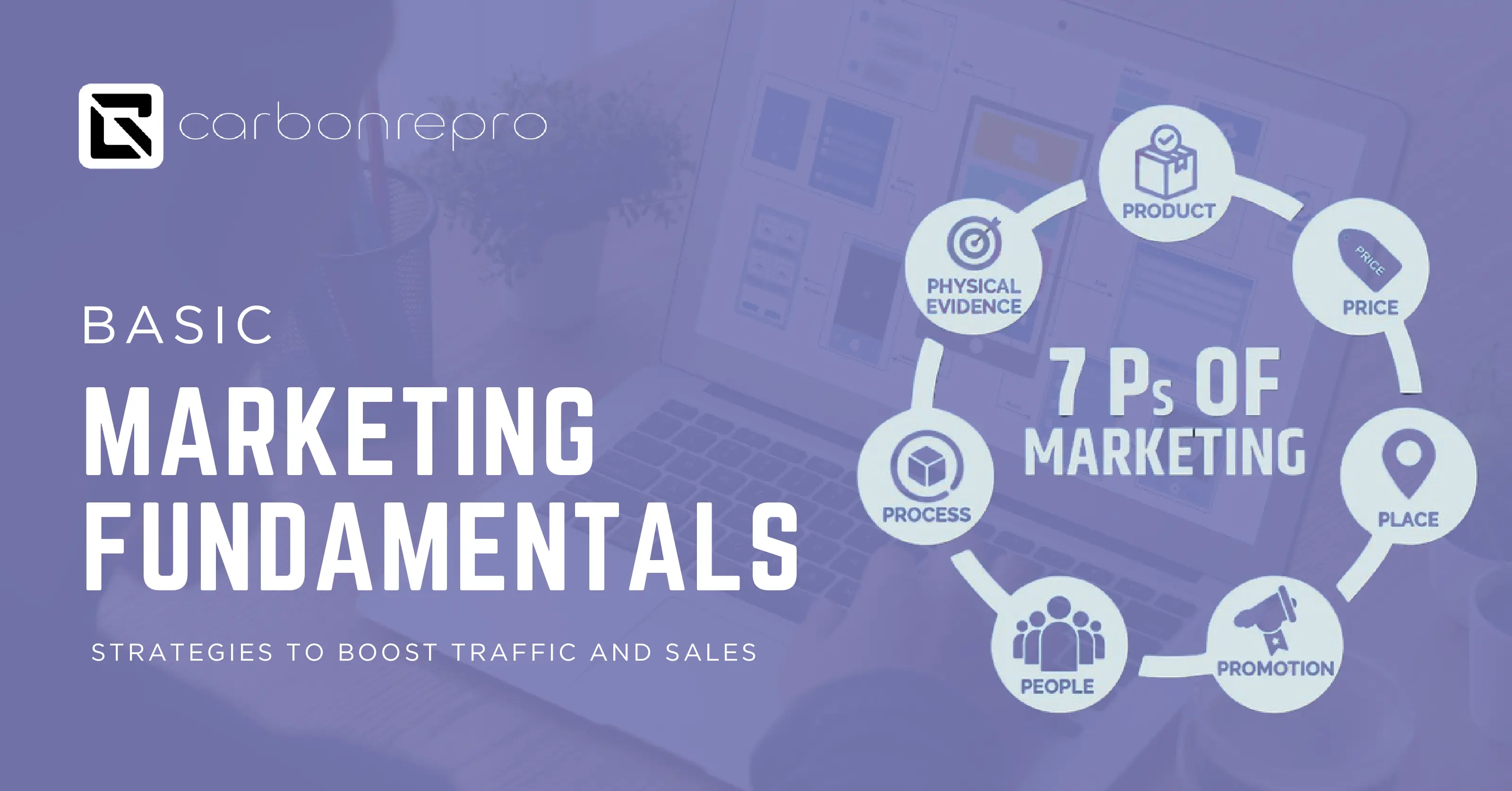
The 4 Ps are one of the oldest marketing fundamentals around, and they are still a useful gut check for whether your offer makes sense before you spend a dollar on promotion. This is core foundational marketing knowledge that applies whether you are a startup or an established business.
Product
Your product needs to solve a real problem. You should be able to explain clearly why someone picks you instead of the alternative. If you cannot say that quickly, that is worth working on first. This is among the basic rules of marketing that never change.
Price
Prices are too low, and people question your quality. Prices are too high without a clear reason, and they walk away. Look at your market and price with intention, not guesswork.
Place
Where does your customer actually go to buy? You need to show up exactly where they already are, rather than asking them to change their habits just to reach you. What do I need to know about marketing placement? Go where the customer already is.
Promotion
Ads, social media, and content all live here. But promotion only works once the first three Ps are solid. Most businesses start with promotion first, and that is usually the mistake. Understanding this sequence is one of the most important things to know about marketing before you spend anything.
Key Marketing Channels to Know
Not every business does well on every channel, so it is worth being deliberate about where your customers actually spend their time. This is a core part of the basics of marketing that beginners and experienced marketers alike need to revisit regularly.
Search Engine Optimization
SEO makes it easier for your website to show up on a Google search results page. It takes time to build, but a well-optimized site keeps generating traffic for years afterward. For marketing fundamentals for beginners, SEO is one of the first channels worth learning.
Social Media Marketing
Pick a platform based on where your audience is already active. LinkedIn is close to a default choice if you are selling to other businesses. Visual, lifestyle-driven products tend to do well on Instagram and TikTok instead. This channel selection is part of the basic marketing strategy that every business needs to get right.
Email Marketing
Email is one of the most underused channels out there. When someone hands over their email address, they are giving you real attention. Use it to send content that is actually useful rather than just promotional. This is basic marketing knowledge that consistently gets overlooked.
Paid Ads
Advertising fundamentals start here. Paid ads work well for quick results, but they stop the moment you stop paying. Test any platform with a small budget first, then scale up once you see what is converting.
The Marketing Funnel Explained
The funnel shows how someone moves from stranger to buyer, and each stage calls for a different message from you. Understanding the funnel is essential basic marketing knowledge for anyone building a strategy from scratch.
Awareness is where people first find out you exist. The goal here is simply to make a good impression, not push a hard sale.
Consideration is where they start comparing you to others. Reviews, case studies, and genuinely helpful content do the heavy lifting at this stage.
Conversion is where they are finally ready to buy. Keep the path simple. A confusing checkout process will lose people right at the finish line.
B2B vs B2C Marketing Fundamentals
Both rely on the same marketing fundamentals underneath, but they look very different in practice. This is one of the basics about marketing that confuses a lot of people early on.
B2B marketing means selling to other businesses. Decisions take longer since more people need to sign off. LinkedIn and long-form content tend to perform well here. AEC marketing fundamentals and similar industry-specific applications fall into this category.
B2C marketing means selling directly to individual consumers. Decisions happen faster, and emotion plays a bigger role. Short videos, customer photos, and reviews tend to move people quickly.
What is the real difference between B2B and B2C marketing fundamentals? The core principles are the same for both. B2B involves a longer sales process with multiple decision-makers, while B2C moves faster and leans more on emotion. The platforms and content style you use will look quite different between the two.
Business Fundamentals for Creative Professionals
Marketing fundamentals for future professionals and creative practitioners are the same core principles applied to a different context. Understanding positioning, audience research, channel selection, and measurement matters just as much for designers, photographers, and content creators as it does for traditional businesses.
Business fundamentals for creative professionals often get overlooked because creatives tend to focus on craft over strategy. But a great portfolio with no marketing strategy behind it will always struggle. The basics in marketing for creatives start with the same question every other business must answer: who exactly are you trying to reach?
Core marketing fundamentals for evaluating advertising platforms are especially useful for creative professionals considering paid promotion. Before spending money on any platform, evaluate whether your target audience is actually there and whether the platform’s ad format suits your content style.
How to Build a Simple Marketing Strategy?
You do not need a long, complicated plan to get started with marketing the basics. Just these five steps:
Set a clear goal: pick one focus, whether that is leads, sales, or brand awareness.
Know your audience: revisit the buyer persona you built earlier.
Choose two or three channels: trying to be everywhere at once usually means being nowhere well.
Plan your content: decide what you will actually post each week.
Monitor results: double down on what is working and cut what is not.
A simple plan you actually follow will always beat a perfect one you ignore. This is the marketing primer every business needs before touching an ad account.
Measuring What Matters
Marketing for business without tracking is just spending money and hoping. You need real numbers to know if anything is actually working. Likes and shares feel good but they do not reliably grow a business.
Watch your website traffic and conversion rate closely. Keep an eye on cost per lead and return on ad spend. These are the numbers that tell you the real story and reflect whether your fundamentals in marketing are actually being applied correctly.
Check your results at least once a week. When something is working, do more of it. When something is not, swap it out for something else.
Staying Current With Marketing Trends
The core principles of fundamental marketing do not change much over time, but the way businesses apply them keeps shifting. A few reasons why:
Changing consumer demographics. Younger audiences respond to marketing differently than older ones do, so understanding who you are actually talking to still matters most.
Emerging technology. Tools like voice search and AI-powered image generation keep opening new ways to reach people. This is one of the basics for marketing that requires ongoing attention.
Fluctuating market conditions. What people can afford shifts with the economy, so your plan needs enough flexibility to adjust when conditions change.
Cultural shifts Social and political change affects how people relate to brands. Audiences increasingly pay attention to a brand’s actual values, not just its products.
Change here is often gradual, and it is genuinely hard to predict the next shift with certainty. That is exactly when learning from other marketers through blogs, case studies, and shared results becomes useful.
Conclusion
Marketing fundamentals are not some complicated secret formula. They are the basics of marketing done right and done consistently: know your audience, pick the right channels, and track everything. Most struggling businesses are not doing anything dramatically wrong. They are just skipping steps and wondering why nothing is working.
Small focused steps consistently beat big scattered ones. The team at Carbonrepro helps businesses get these marketing basics right, keeping things simple and focused on what actually moves results.
FAQs
What are marketing fundamentals and why do they matter?
Marketing fundamentals are the foundation of any solid strategy. They cover knowing your audience, choosing the right channels, and tracking your results consistently. Without a clear plan built on these basics of marketing, your spending scatters across too many directions. Get these right first and every other tactic works better.
How you can use the fundamentals of marketing even if you have no experience at all?
Start with marketing basics for beginners: identify your target audience, write down what they want and the problems they face day to day, then pick one channel that genuinely makes sense for reaching them. This is what to know about marketing before you spend anything.
What component of a marketing strategy is the most critical?
The most important of these, honestly, is knowing your audience. Everything else that follows circulates back from that one thing. Simply put, a bad audience doesn’t help good campaigns convert. Once you get the audience correct, it becomes easier to do the rest!
How to Apply Marketing Fundamentals for Small Businesses
Even more so if you are working on a tight, low budget. That wasted spending has a far larger impact on small businesses than large ones. Every rupee is accounted for with a Clear message + Right channel.
What is the B2B vs. B2C Marketing Fundamentals Difference?
Is marketing difficult for complete beginners?
Marketing fundamentals for beginners are genuinely learnable. The concepts are not complicated. What makes marketing feel difficult is skipping the foundation and jumping straight to tactics. Start with everything you need to know about marketing at the basics level and build from there. The difficulty drops significantly once the fundamentals of marketing are clear.



 Powered by