

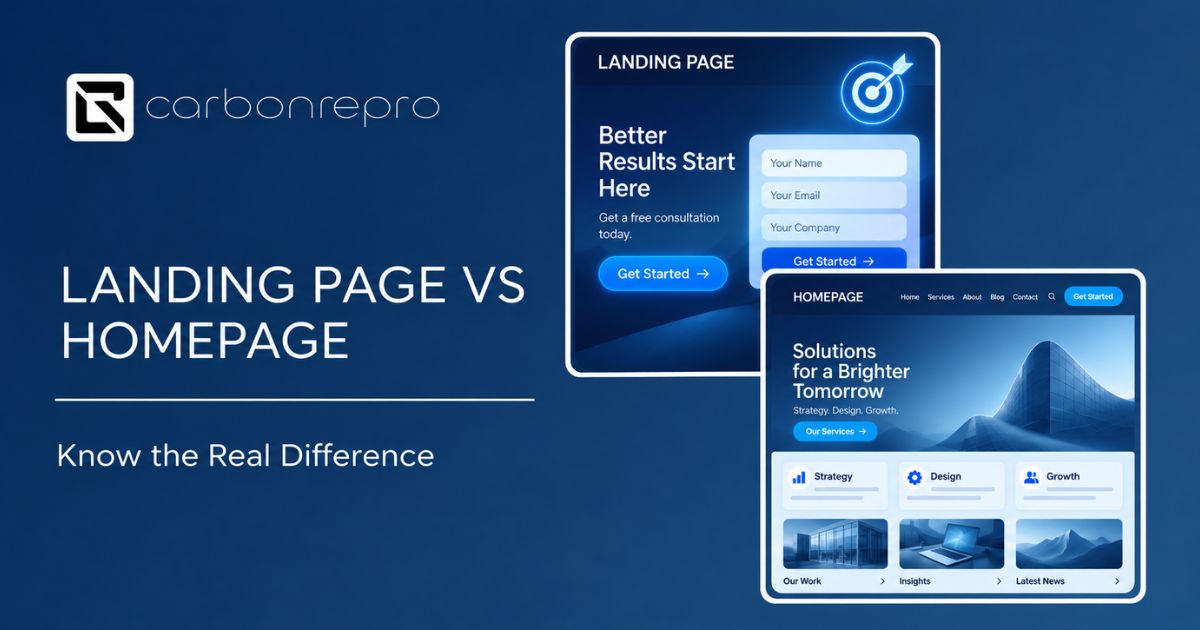
Sending every ad click straight to your homepage is one of the most common ways businesses waste ad spend. A landing page is built to do one job, and that focus is exactly why it converts better than a homepage ever will for a specific offer.
This guide explains what a landing page actually is, how it differs from a homepage, and when to use each one.
What Is a Landing Page?
A landing page is a standalone web page built around a single goal, like getting someone to book a call, download a guide, or request a quote. Unlike most other pages on your site, it usually has no navigation menu and no distractions, so every visitor’s attention stays on that one action.
What Is a Homepage?
A homepage is the main entry point to your entire website. It introduces your business, gives visitors an overview of what you offer, and helps them navigate to whatever section is relevant to them, whether that is your services, your portfolio, or your contact page.
What Is the Difference Between a Landing Page and a Homepage?
Purpose
A landing page has one job: get the visitor to take one specific action. A homepage has many jobs at once, introducing your brand, showcasing your work, and guiding many different types of visitors to many different destinations.
Navigation
A landing page typically strips out the main menu and footer links entirely, so there is nowhere else for a visitor to click except the one call to action. A homepage is full of navigation, since its whole purpose is helping people explore the rest of your site.
Audience
A landing page is usually built for one specific audience arriving from one specific source, like a Google ad or an email campaign. A homepage serves a much broader mix of visitors, at every stage of deciding whether to work with you.
What Success Looks Like
A landing page is measured by its conversion rate, the percentage of visitors who complete the one action it was built for. A homepage is measured more broadly, through things like time on site, pages viewed, and overall traffic quality.
When Should You Use a Landing Page Instead of a Homepage?
Paid Advertising
If you are running Google Ads or social ads, sending that traffic to a dedicated landing page instead of your homepage almost always performs better, since the page matches exactly what the ad promised, with nothing else competing for attention.
Specific Offers or Promotions
A limited-time offer, a free consultation, or a downloadable guide each deserves its own landing page built around that specific offer, rather than being buried as one more link on a busy homepage.
Testing New Messaging
Because a landing page is isolated from the rest of your site, it is easy to test different headlines, images, or calls to action without touching your main website.
When Should You Send Traffic to Your Homepage Instead?
Organic traffic from people who are simply exploring, or who already know your brand and are searching for you by name, generally does better landing on your homepage. These visitors usually want the full picture of your business, not a single narrow pitch.
How Does This Connect to Conversion Rate Optimization?
Landing page optimization is really a focused piece of the bigger practice known as conversion rate optimization, or CRO. CRO looks at your entire website, including your homepage, service pages, and forms, and works to improve the percentage of visitors who take action anywhere on the site. A landing page is simply the easiest place to start, since it isolates one goal and makes testing straightforward.
Common Landing Page Mistakes
Adding a full navigation menu anyway. Every extra link is another way for a visitor to leave without completing the one action the page was built for.
Sending paid traffic to the homepage. This is one of the most common and most expensive mistakes in paid advertising, since the visitor lands somewhere that does not match what the ad promised.
Asking for too much too soon. A form with ten fields discourages far more visitors than one asking for just a name and phone number or email.
Never testing anything. A landing page that never gets its headline, image, or call to action tested is a missed opportunity, since even small changes can meaningfully shift conversion rates.
Frequently Asked Questions
What is a landing page?
A landing page is a standalone web page built around one specific goal, like capturing a lead or promoting an offer. It usually has no navigation menu, keeping the visitor’s attention on a single call to action.
What is the main difference between a landing page and a homepage?
A landing page is built for one specific action and one specific audience, usually with no navigation. A homepage introduces your whole business and helps a broad mix of visitors find their way to different parts of your site.
Should I send Google Ads traffic to my homepage or a landing page?
A dedicated landing page almost always performs better for paid ads, since it matches exactly what the ad promised and removes distractions that could pull the visitor away before converting.
Is landing page optimization the same as conversion rate optimization?
Landing page optimization is a smaller, focused part of conversion rate optimization. CRO covers your entire website, while landing page optimization focuses on improving one specific page.
Does a landing page need to be part of my main website?
It does not have to be. Many businesses build landing pages on a separate page or even a separate domain built specifically for a campaign, though keeping it on your main site can help feed engagement signals back to your overall SEO.


 Powered by