

If your website has pages competing against each other for the same search terms, or visitors bouncing around with no clear path, a content silo can fix both problems at once. It is one of the simpler SEO concepts to understand, and one of the most overlooked.
This guide explains what a content silo is, how it helps your rankings, and how to build one without overcomplicating your site.
What Is a Content Silo?
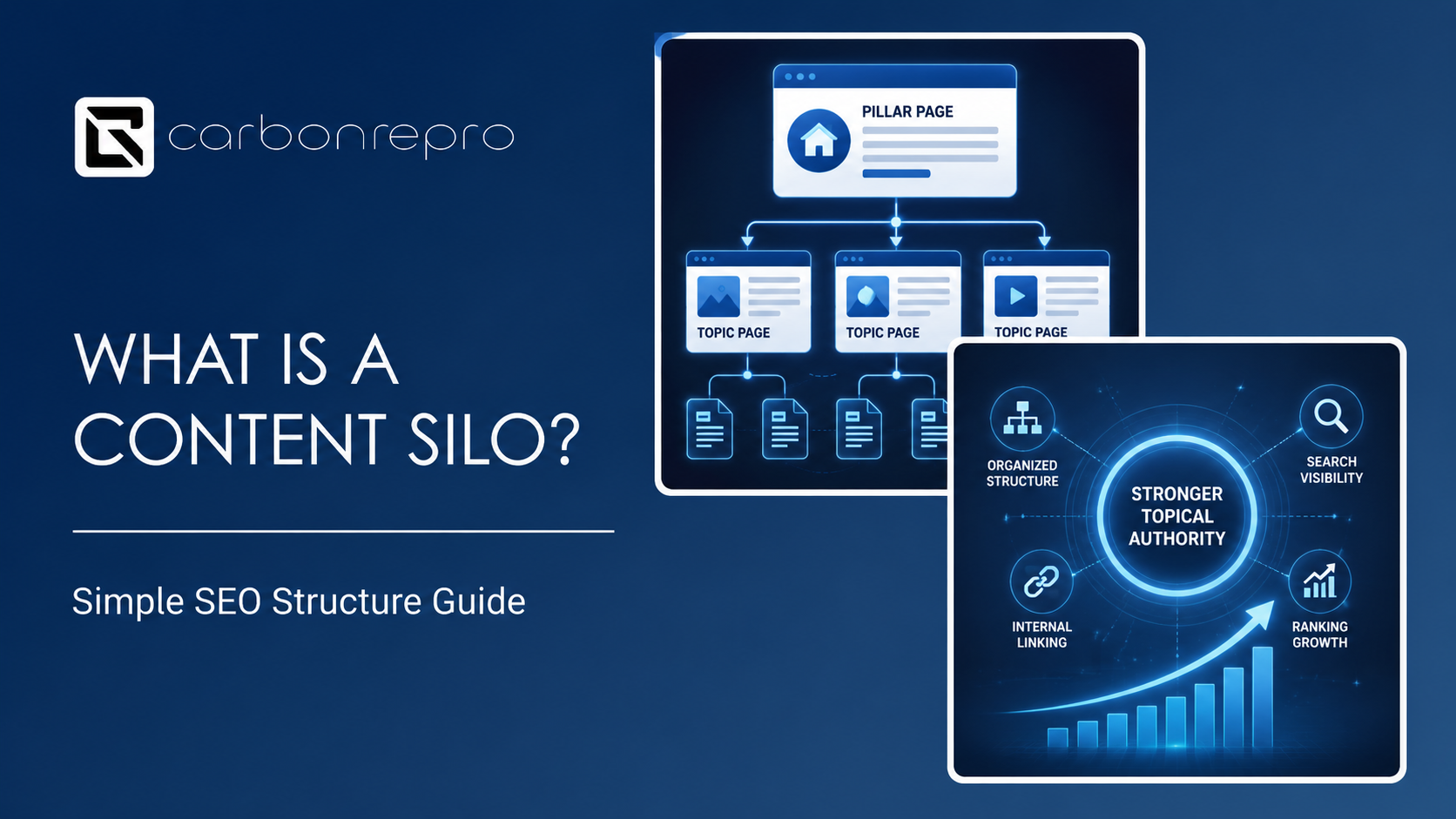
A content silo is a way of organizing your website so related pages are grouped together around one main topic, connected through internal links. Each silo has one hub page at the top and a set of supporting pages beneath it, all linking back to the hub and to each other. This tells search engines exactly which pages belong together and how important each one is.
How Does a Content Silo Work?
Picture your website as a filing cabinet. Instead of tossing every page into one drawer, a silo puts related pages into their own labeled folder. A folder about local SEO would hold a hub page on local SEO, with supporting pages underneath covering things like Google Business Profile setup, local citations, and review management. Every page in that folder links to the hub, the hub links back to every page, and where it makes sense, the supporting pages link to each other too.
Why Does a Content Silo Improve SEO?
It Builds Topical Authority
When a group of pages all focus tightly on one subject and link to each other, it signals to search engines that your site has real depth on that topic. A site with one page about a service usually loses to a site with a hub page and several supporting pages covering that same service in detail.
It Prevents Keyword Cannibalization
Keyword cannibalization happens when two or more pages on the same site compete for the same search term, splitting your ranking potential between them instead of concentrating it on one strong page. A clear silo structure gives each page its own defined role, so pages support each other instead of competing.
It Improves Crawling and Indexing
Search engines crawl websites by following links. A well-organized silo makes it easy for crawlers to find every page and understand how it fits into the bigger picture, which helps get pages indexed faster and more completely.
It Helps Visitors Find What They Need
A logical structure is not just good for search engines. Visitors who land on a hub page can easily find the specific page they actually need, and that smoother experience tends to keep them on your site longer.
How Do You Build a Content Silo?
Start With Your Core Topics
List the main subjects your business genuinely offers or writes about, like your core services or product categories. Each one becomes a potential silo.
Create One Hub Page Per Topic
Your hub page should give a broad overview of the topic and link out to every supporting page underneath it. Think of it as the front door to that section of your site.
Build Supporting Pages With a Clear Purpose
Each supporting page should cover one specific angle of the topic in real depth, not just repeat what the hub page already says. If two supporting pages end up saying almost the same thing, they are probably competing with each other rather than supporting the hub.
Link Deliberately
Every supporting page should link up to its hub, and the hub should link down to every supporting page. Linking across unrelated silos should be occasional and only when it is genuinely useful to the reader, not just for the sake of adding links.
Audit What You Already Have
Most websites do not start from a blank page. Look at your existing pages, group them by topic, and see where pages overlap, compete, or simply have no clear home. This is usually where the biggest quick wins are.
Common Content Silo Mistakes
Creating a silo with only one page in it. A hub page with nothing underneath it is not really a silo, and it will not build the topical depth search engines reward.
Letting supporting pages duplicate each other. If two pages answer nearly the same question, they should usually be combined into one stronger page instead of split into two competing ones.
Forgetting to link back up to the hub. Internal linking only works as a two-way street. Supporting pages that never link back to their hub weaken the whole structure.
Building silos around topics with no real content behind them. A silo works because it demonstrates depth. Forcing thin, repetitive pages into a silo structure just to fill it out usually does more harm than good.
Frequently Asked Questions
What is a content silo in SEO?
It is a way of organizing website pages so related content is grouped around one main topic, connected through internal links, with a central hub page and supporting pages underneath it.
How does a content silo help SEO rankings?
It builds topical authority by showing search engines that your site covers a subject in real depth, helps prevent pages from competing against each other for the same keywords, and improves how efficiently search engines crawl and index your site.
What is the difference between a silo and a content hub?
A strict silo generally avoids linking between different topic groups. A content hub allows related pages across different groups to link to each other where it genuinely helps the reader, giving it more flexibility.
Do small websites need content silos?
Smaller sites benefit less dramatically, since there are fewer pages to organize, but even a handful of related pages benefit from clear internal linking back to one main hub page.
Can a poorly built silo hurt my SEO?
Yes. Thin, duplicate, or overlapping pages forced into a silo structure can create the exact keyword cannibalization problem a silo is supposed to prevent.
Want Help Structuring Your Website’s Content?
Carbonrepro builds internal linking and site structure into every SEO and technical SEO engagement, especially for sites recovering from duplicate or overlapping pages. Reach out and we can map out where your content currently overlaps and where a clearer structure would help.




 Powered by