

Missed calls cost businesses money. A customer calls, no one picks up, and they call the next business on the list. An AI receptionist fixes that problem. It answers your phone day and night, so you never lose a customer to voicemail again.
This guide explains what an AI receptionist does, how much one costs in 2026, and how to tell if your business actually needs one.
What Is an AI Receptionist?
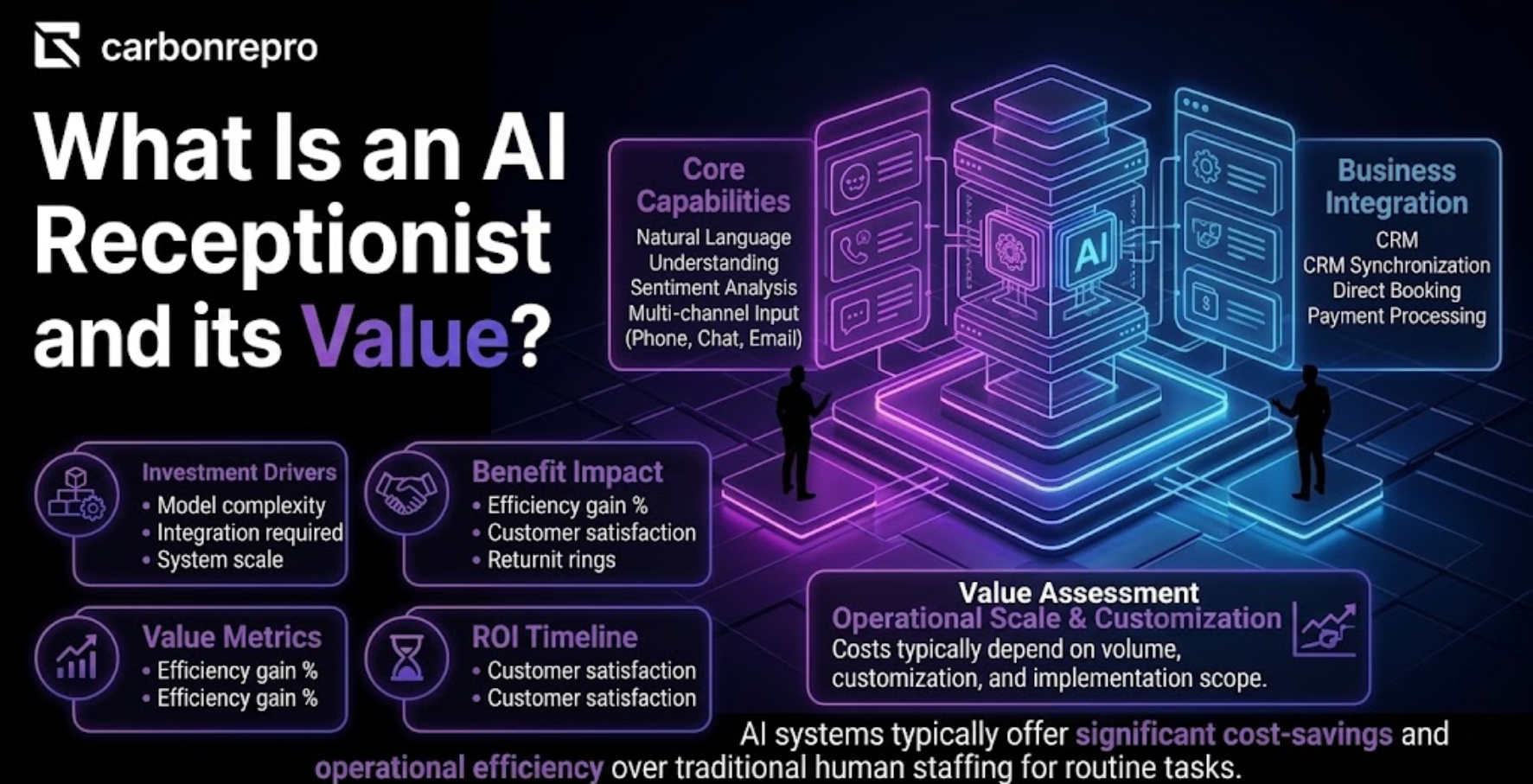
An AI receptionist is a computer program that answers your business phone calls. It talks to callers like a real person, answers common questions, and books appointments. It works around the clock, even at 3 a.m. or on Sunday, so no call ever goes to voicemail.
How Does an AI Receptionist Work?
An AI receptionist connects to your business phone line. When someone calls, it picks up in a few rings and uses voice technology to understand what the caller is saying. It pulls answers from your business information, like your hours or pricing, and responds in a natural voice.
Most systems also connect to your calendar and your customer records. That means the AI can book an appointment, save a caller’s name and number, or send you a text message right after the call ends.
What Happens When It Cannot Answer a Question?
A good virtual front desk knows its limits. If a caller asks something too complex, or sounds upset, the system passes the call to a real person right away. It also takes a detailed message so nothing gets lost.
What Can an AI Receptionist Do?
Here is what most systems handle without any help from you:
- Answer calls 24 hours a day, including weekends and holidays
- Answer common questions about hours, location, and pricing
- Book, move, or cancel appointments on your calendar
- Ask a few screening questions to sort serious leads from spam calls
- Send a text or email confirmation after each call
- Save call notes to your customer records automatically
- Transfer urgent calls straight to a real person
How Much Does an AI Receptionist Cost?
Most small businesses pay between $50 and $300 a month for a full-featured automated phone assistant. Basic plans with limited call volume start closer to $25 to $65 a month. Custom-built systems with heavy integrations can run higher, often starting with a setup fee plus a monthly plan.
The exact price depends on how the provider bills you. There are three common pricing models.
Flat Monthly Rate
You pay one price for a set number of calls or minutes each month, with no surprise charges. This is the easiest model to budget for, and it is a good fit if your call volume stays fairly steady.
Per Minute
You pay for each minute the system spends on a call, usually somewhere between $0.25 and $0.50 a minute. This can feel cheap at first, but the bill grows fast once call volume picks up.
Per Call
You pay a set fee for every call the system handles, often between $0.75 and $2.50 per call. This works well for businesses that get a small, predictable number of calls each month.
How Does That Compare to a Human Receptionist?
A full-time front desk employee costs a business several thousand dollars a month once you add salary, benefits, and payroll taxes. An automated receptionist service typically costs a small fraction of that, though it does not replace every skill a trained employee brings, like reading a customer’s tone or handling a tricky in-person situation.
Is an AI Receptionist Worth It for a Small Business?
For most small businesses that miss calls during busy hours, after hours, or on weekends, the answer is usually yes. Even a handful of recovered calls each month can cover the cost. The bigger question is not whether it is worth it, but whether your call volume and budget match the plan you pick.
It makes the most sense for businesses that get frequent phone calls but cannot afford, or do not need, a full-time front desk person. Home service companies, medical and dental offices, salons, law firms, and retail shops are common fits.
It makes less sense for businesses that rarely get inbound calls, or whose calls almost always need a real person’s judgment right away.
AI Receptionist vs Answering Service vs Virtual Receptionist
These three terms get mixed up a lot, so here is the difference in plain language.
An AI receptionist is software. It answers calls using voice technology, with no human on the other end unless the call gets transferred.
A virtual receptionist is usually a real person, working remotely, who answers your calls during set hours. You are renting a person’s time, not a piece of software.
An answering service is a broader term that can mean either one. Some answering services are fully automated, others use live agents, and some use both, with the AI handling simple calls and a person stepping in for anything complicated.
If cost is your main concern, the automated option is almost always cheaper. If you need a caller to feel like they reached a real person every single time, a live service may be worth the extra cost.
What Should You Look for Before You Choose One?
- Clear pricing. Ask exactly what happens if you go over your plan’s call or minute limit.
- Real integrations. Check that it connects to the calendar and customer software you already use.
- A real trial. Call the demo line yourself and see how it handles a tricky question.
- Easy handoff to a human. Confirm urgent calls get routed to a real person fast, not stuck in a loop.
- Multiple languages, if you need them. Many providers now offer this, but not all of them.
Common Mistakes Businesses Make
Picking the cheapest plan without checking overage fees. A low sticker price with high per-minute charges can end up costing more than a flat-rate plan once your call volume grows.
Skipping the test call. Reading a features list is not the same as hearing how the voice actually sounds and how well it understands real questions.
Turning off the human handoff. Some businesses set up their system to handle everything, then miss urgent calls that really needed a person right away.
Frequently Asked Questions
What is an AI receptionist?
An AI receptionist is software that answers your business phone calls, responds to common questions, and books appointments. It works 24 hours a day and does not require a live person on the line.
How much does an AI receptionist cost?
Most small businesses pay between $50 and $300 a month, depending on call volume and features. Basic plans start around $25 to $65 a month, and custom-built systems cost more upfront.
Is an AI receptionist worth it for a small business?
Yes, for most businesses that get regular calls and cannot staff a full-time front desk. The cost is usually covered by just a few extra bookings or recovered calls each month.
What is the difference between an AI receptionist and an answering service?
An AI receptionist uses software with no human involved unless the call is transferred. An answering service can be automated, live, or a mix of both, so the term covers a wider range of setups.
Can an AI receptionist book appointments?
Yes. Most systems connect directly to your calendar and can book, move, or cancel appointments while the caller is still on the phone.
Does an AI receptionist replace a human employee?
Not entirely. It handles routine calls well, but complex situations, emotional callers, and in-person tasks still need a real person.
Ready to Add an AI Receptionist to Your Business?
Carbonrepro builds AI-powered phone and chat systems as part of our AI Solutions services, alongside AI chatbots for your website and automated lead capture. If you are also weighing a chat widget against a phone assistant, our guide on AI chatbots for small business breaks down that side of it, and our custom AI chatbot cost guide covers chatbot pricing specifically. Reach out and we will walk you through what fits your call volume and your budget.

 Powered by